
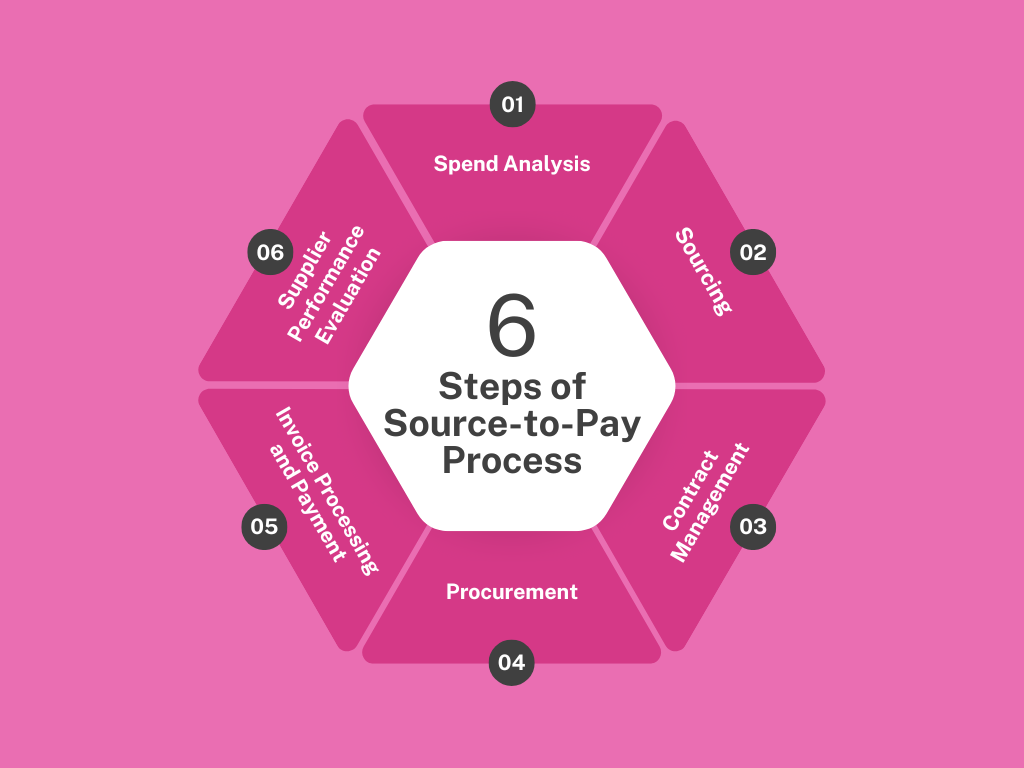
Companies are not happy with disjointed business purchasing processes or responsive supplier management. Rather, they are adopting smart online solutions that introduce transparency, precision, and global sourcing. This change has given rise to the development of the source to pay systems, which is the system that combines sourcing, contracting, purchasing and payment in a single digital platform.
Since enterprises are increasingly under pressure to optimize costs, comply, and be sustainable, such systems are not a luxury; they are a strategic necessity. In addition to cost management, these platforms open access to efficiency, enhance the relationship with suppliers, and provide organizations with real-time insights.
1. Process Integration and Efficiency End-to-End
The old systems of procurement can be characterized by fragmented tools and manual processes that slow down the decision-making process. These systems contain all the essential procurement processes of identifying and screening suppliers up to the payments in a single digital platform.
This integration removes inter-departmental silos, so that handoffs between sourcing, finance, and compliance teams are more seamless. Automated process workflows allow approval, documentation standardization, and decrease repetitive management processes. The outcome is increased speed, reliability, reduced procurement errors, and increased accountability.
Through centralization, businesses have complete knowledge of all the purchases, hence they can monitor progress, performance of suppliers, and they can easily enforce compliance policies. Such smooth coordination not only saves time, but it can turn procurement into a future-thinking, responsive, and forward-thinking process with the ability to react swiftly to business demands and market fluctuations, along with supplier risks and varying business priorities.
2. Enhanced Data and Analytics-based Decision Making
Procurement in the modern world is data-driven, and source to pay systems place actionable insights in the center. These channels gather and process information throughout the procurement process and transform routine transactions into potent strategic information.
Dashboards are available to procurement leaders to indicate supplier performance, spending trends, contract utilization, and opportunities for savings in real time. This data-centric model can allow organizations to make decisions faster and smarter, and also allows organizations to spot areas of inefficiency before they become a financial threat.
Embedded analytics make companies predict demand, compare suppliers, and assess adherence to company policies or external laws. Even the changes in prices or supply can be predicted with the help of models, which allow teams to act in advance. Through converting raw procurement data into useful information, these systems can enable organizations to make sound decisions that lead to value creation, reinforce supplier relationships, and make the entire business more resilient.
3. Enforced Supplier Cooperation and Adherence
Effective procurement relies on good supplier relationships that are founded on transparency, trust, and the common objective. The improved systems also have a digital collaboration area where suppliers and buyers can communicate in real time between offers of submitting proposals, completing contracts, and payment tracking.
Such transparency does away with misunderstanding and misunderstanding and both parties clearly know what to expect. The payment schedules, order details, and feedback are readily available to suppliers, and the businesses are able to assess the vendor performance by measurable KPIs, including delivery times, quality standards, and compliance with sustainability requirements.
Such systems ensure compliance as well as make rules and policies part of the workflow. It can be in the process of certification checking or supplier audit, ethical sourcing maintenance, or any other process; automation will make sure that each transaction follows internal and regulatory frameworks. This causes businesses to mitigate the risk of fraud or non-compliance and establish long-term partnerships with suppliers on the basis of accountability and mutual value.
4. Rapidity and Economies of Scale in a Dynamic market
These systems help procurement teams to be more responsive to market changes, changing supplier supply, and demand changes. Dynamic sourcing and automated spend controls enable organizations to react quickly to disruptions that may be caused by shortages in the global supply chains or changes in regulations. Gathering the information about suppliers and purchasing history, companies have an opportunity to negotiate more favorable conditions, to optimize the process of the contract renewal, and to find alternative sources.
The systems also facilitate cost savings due to process automation, minimization of errors, and spend visibility. The procurement departments are able to cut down on the operational cost and enhance the accuracy of decisions by cutting down on the number of people who have to be involved in the processes and the number of steps that need to be taken. Having the capability to calculate the total cost of ownership (TCO) and monitor real-time expenditure enables businesses to shift away the reactive cost-cutting to strategic value-creation, with the end result being a better margin and performance under pressure.
5. The AI in Procurement Transformation
Artificial intelligence is reshaping the working process of procurement and introducing predictive precision and automation to all phases of the procurement process. Artificial intelligence has enabled the procurement aspect of business operations to go beyond the old-fashioned reporting and utilize smart information to make quicker and smarter decisions.
The systems have AI tools capable of automatically categorizing spend data, uncovering abnormalities, and finding savings opportunities. With natural language processing (NLP), it is possible to intuitively search in the contracts and ensure compliance, as well as predict risks of suppliers or possible delays with the help of machine learning algorithms.
In addition, AI chatbots improve user experience by addressing routine requests, which allows the procurement team to concentrate on strategic negotiations and supplier development. The outcome is a more responsive, active procurement process, which learns and gets better and better. Through the integration of AI-enabled intelligence in the procurement processes, companies can reach greater precision, reduced cycle time, and closer alignment of sourcing objectives with strategic business objectives.
6. Sustainability and Large-Scale Ethical Sourcing
Sustainability and the practice of ethics are being put forward by procurement leaders as part of the business strategy. Having in-built sustainability tracking and supplier audit tools, the organizations are able to have responsible sourcing at all levels of procurement.
Such systems observe certifications of suppliers, measure environmental indicators, and impose adherence to international ESG guidelines. With automated reporting capabilities, it is simple to evaluate the environmental and social effects of purchasing actions in tracking carbon footprint to the moral labor law.
Paperless operations and minimized waste by applying efficient workflows are other benefits of digital sourcing platforms. By making sure that all purchases are made in line with the corporate sustainability objectives, the business is not only able to comply with the regulatory expectations but also to improve the brand image.
Conclusion: Procol as a Comprehensive Solution
For businesses looking to improve procurement efficiency, a source 2 pay platform integrated with AI in procurement is essential. By unifying sourcing, purchasing, and payment processes, organizations gain visibility, control, and cost savings while fostering stronger supplier relationships.
Procol provides a robust solution that combines intelligent automation, real-time analytics, and seamless integration across the procurement lifecycle. Its platform empowers organizations to For businesses striving to achieve peak procurement efficiency, the adoption of a comprehensive source-to-pay (S2P) platform, seamlessly integrated with advanced AI in procurement capabilities, is no longer a luxury but a fundamental necessity. This unified approach consolidates the entire procurement lifecycle, from initial sourcing and vendor selection through purchasing, order management, and ultimately, payment processing.