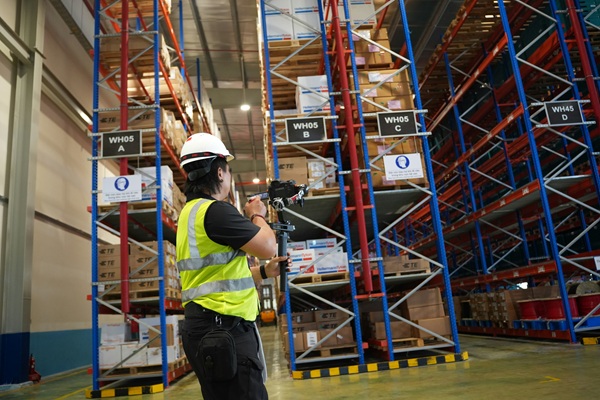
Warehouse efficiency isn’t really about how big a facility is. It’s about how intelligently that space is used. Plenty of operations expand storage capacity without adding a single square foot, simply by understanding their dimensions better.
With rising land and operational costs, especially in dense logistics hubs, every bit of unused space carries a price. That shifts the focus away from expansion and toward precision. Dimensions and volume start to matter more than raw size.
Why Dimensions Matter More Than Floor Space
A surprising number of warehouses still think in terms of floor area first. It’s an easy metric to visualise, but it’s also misleading. What sits above that floor, often unused, is where the real inefficiency hides.
Ceiling height, aisle spacing, and load-bearing limits quietly dictate how much inventory a facility can actually handle. When those factors aren’t measured properly, storage systems end up working below their potential.
Researchers have pointed out that better space utilisation often reduces costs without any physical expansion. That’s not a technology problem. It’s a planning problem. Once dimensions are treated as variables that can be optimised, not fixed constraints, the entire layout becomes more flexible.
Volume as a Performance Metric
Volume sounds like a static number, but in practice, it behaves more like a performance indicator. Two warehouses with identical square footage can operate very differently depending on how much vertical space they actually use. The gap between those two is where efficiency or waste lives.
Facilities that pay attention to this tend to track a few key things:
- How much cubic space is actively used
- How high inventory is stacked relative to safe limits
- Where empty air pockets exist
That last one is often ignored. Empty space doesn’t show up in reports, but it affects everything from storage density to movement efficiency.
Maximising Vertical Volume
The easiest gains in warehouse efficiency usually come from going upward, not outward. But vertical storage only works when it’s controlled.
Random stacking creates risk. Structured stacking creates capacity. Storage systems that support consistent stacking patterns, like stackable pallets, make that shift easier. They don’t just save space; they make space usable. There’s a difference.
That said, pushing upward without understanding limits can backfire. Equipment reach, structural tolerance, and load distribution all come into play. Ignore those, and the system becomes fragile instead of efficient.
The Hidden Cost of Poor Dimensional Planning
Not all inefficiencies are obvious. Some build slowly. A few extra seconds per pick. Slight congestion in one aisle. Minor adjustments during loading. None of it seems critical alone. But over time, these small inefficiencies stack up:
- Movement paths become longer than necessary
- Labour effort increases without visible output gains
- Storage zones become inconsistent
The UK Warehousing Association has noted that poorly planned layouts can cut productivity significantly. And it rarely comes down to one big mistake; usually, it’s a series of small ones tied to poor dimensional decisions.
Aligning Infrastructure with Inventory
Storage works best when it reflects what’s being stored. That sounds obvious, but it’s often ignored. Different product sizes, weights, and turnover rates require different spatial approaches. When everything is forced into a uniform system, inefficiencies start creeping in.
Better-performing warehouses tend to standardise where possible, but stay flexible where needed. Aisle widths match equipment. Storage systems reflect product dimensions. Layouts adapt as inventory changes. There’s a practical balance here. Too rigid, and the system breaks under variation. Too flexible, and it loses efficiency.
Measurement as a Strategic Tool
Measurement isn’t just part of setup anymore; it’s ongoing. Modern warehouses are starting to treat spatial data the same way they treat financial or operational data. It’s tracked, reviewed, and used to guide decisions.
Tools like warehouse management systems and spatial scanning have made that easier. But the real shift isn’t technological, it’s mindset. Space is no longer passive. It’s something that’s actively managed. Being able to test layout changes or stacking adjustments before physically implementing them changes how decisions are made.
Moving Toward Smarter Space Utilisation
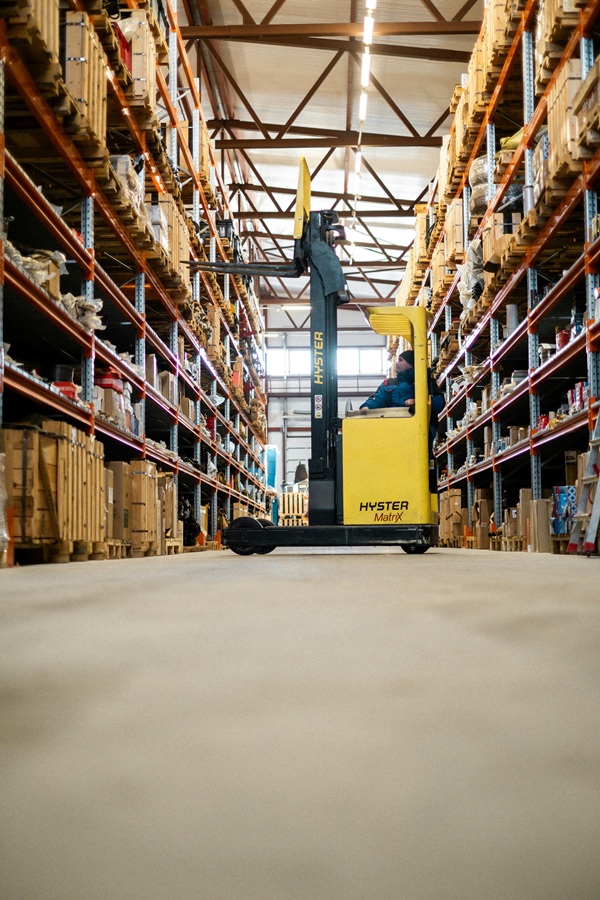
There’s less tolerance now for wasted space. Margins are tighter, and expectations are higher. Warehouses are no longer just storage points; they’re part of the performance chain. And performance depends heavily on how well space is used.
Optimising dimensions and volume isn’t about squeezing in more inventory at any cost. It’s about using space in a way that supports movement, safety, and scalability at the same time. Even small improvements such as an extra layer of stacking, a slightly narrower aisle, and a better-aligned layout can shift overall efficiency more than expected. That’s the part most operations underestimate.